what to look for in a competition pistol
You've seen all of the cool shooting videos on Instagram and Facebook where someone runs effectually shooting fast while looking similar an activity hero, right?
Want to learn how to do information technology?
It's easier than it looks!
The easiest way to "run and gun" is to get into competition shooting. Several of the nigh popular shooting sports today involve running and gunning with a pistol, and USPSA – United states Practical Shooting Association – is 1 of the about commonly found throughout the country.
It'south fun and exciting, and it'south understandable why you might be interested in trying it out.
Today, we're going to walk you through picking a USPSA division to get started in so that you too tin can run effectually shooting stuff and having a blast at the range.
Table of Contents
Loading...
Recommended Guns for USPSA Beginners
First of all, virtually USPSA Newbies are going to start out in either Limited or Production, which makes it pretty easy to recommend guns…and all-time of all you very likely already accept one of these on paw if you've been collecting handguns for any length of fourth dimension
Recommended Guns:
- Beretta 92FS($600)
- Glock 17($499)
- Glock 34 ($595)
- HK45 Tactical ($1,269)
- SIG P320 ($579)
- S&Due west Revolvers (Varies)
Whatever of these choices volition serve you well for learning the ropes, and they're all fine carry or home defense force guns also.
Getting Started in USPSA
Getting started in USPSA isn't difficult, but in addition to learning the rules and the range etiquette, as well as the actual shooting role, y'all'll need to figure out your gear. With eight divisions to dissever up the different kinds of guns you tin can shoot in USPSA it can seem a little confusing.
Go on in mind that I won't be covering all of the dirty details here, and in that location's a reason for that: it'south not that of import if yous're a new USPSA shooter.
Divisions are only of import for roughly grouping competitors by the kind of gun they are shooting so that everyone in the same division will be using like equipment.
Even among experienced competitors, there will be a broad range of gear and guns within the same division and at the stop of the day…information technology'south almost the shooter and non the equipment.
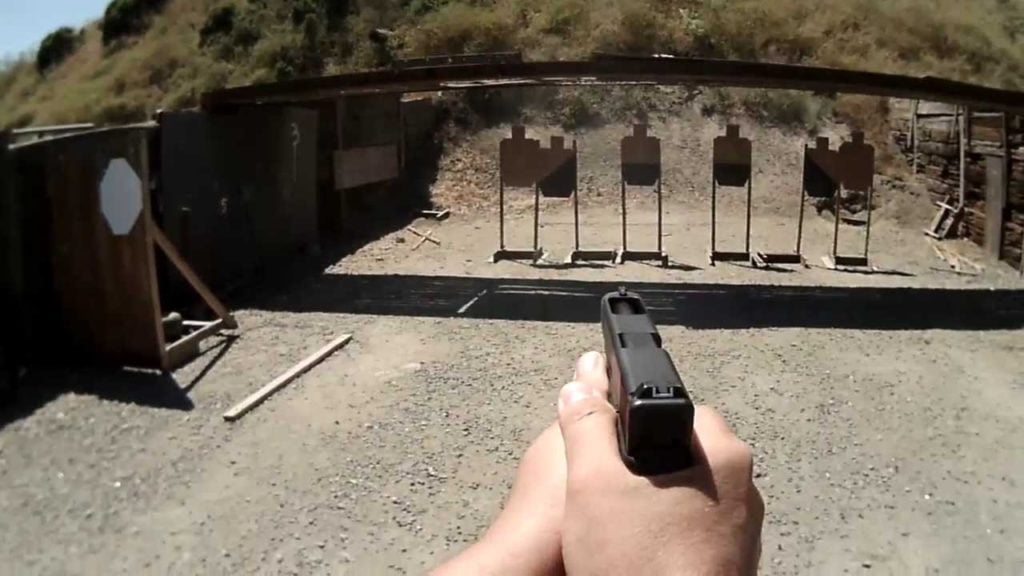
Worried nearly your equipment?
Don't be!
Whether your equipment is "competitive" within a division doesn't matter until after you've had a run a risk to larn the game.
If you bear witness up at your showtime matchknowing what kind of gun you have, how many magazines you own, and whether your gun has been modified at all, you can exist placed into a sectionalisation.
In USPSA, y'all'll want a total-size or a larger compact pistol and at to the lowest degree three standard capacity magazines for it so that yous can carry a minimum of 32-35 rounds on you between what's loaded in your gun and what's on your belt or even in your pockets. The rest is just details and y'all won't need to stress almost them at a local match.
If y'all're a worrier or are more than concerned about being prepared on your starting time twenty-four hour period, this guide will get you on the right rail. Lets look at a quick introduction to what all of the unlike divisions are, the gun-related gear y'all'll need to shoot reasonably competitively in them, and a few pointers for getting gear up.
USPSA Production Division
Non much more than than a decade ago, Production was the new kid on the cake in USPSA. Intended as a place for manufactory guns to compete without having to be lumped in with "race" guns, the Production division is a way for shooters to participate at a relatively low cost with a gun purchased over the counter and only relatively pocket-sized (or no) modifications.
That makes information technology accessible for many new shooters because they not only don't demand a custom gun, but probably already own a suitable firearm for their first few matches.
In fact, not just are modifications non encouraged in this division, many of them aren't fifty-fifty allowed. Outside of purely corrective changes like custom paint jobs, almost all externally visible modifications are restricted in Production.
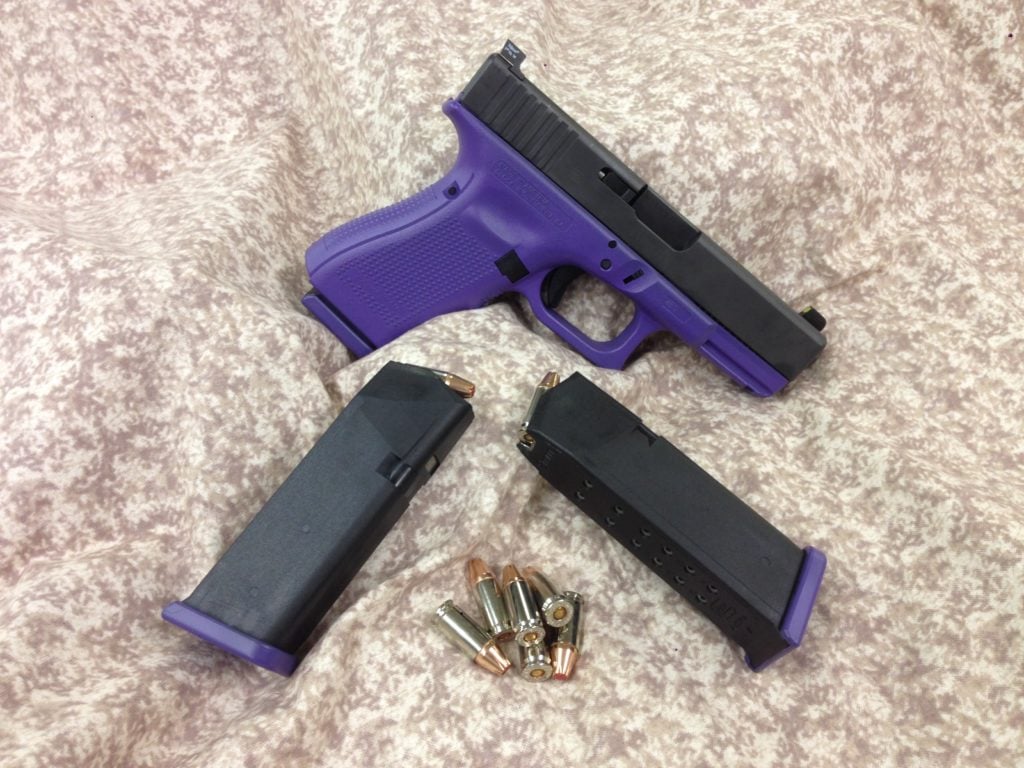
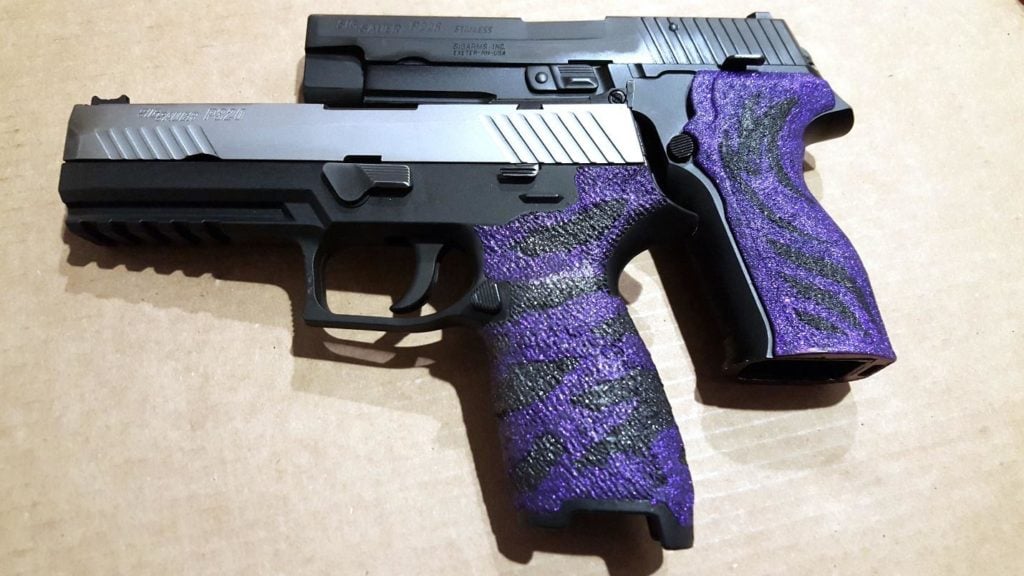
You can change your sights or add a limited amount of grip tape or stippling, and your gun can have internal gunsmithing to ameliorate your trigger pull or your gun's reliability, simply you lot can't do things like change your actual trigger for an all-new aftermarket part. And, of course, it's perfectly okay to just run a completely stock gun directly out of the box.
There is a list of guns that can be shot in Production , but it includes most ordinary striker-, double-, and double-unmarried action guns. It's not merely a place for beginners though – some of the superlative shooters in the sport make their home in Production considering of the technical shooting problem-solving and gun-handling skills it requires to perform at a high level.
One of the biggest challenges in Production is that shooters are limited to ten rounds in each magazine.
That means that a new shooter should have a minimum of five magazines for their gun, and a fashion to conduct at least 4 of them. Nether the rules, all of those magazines must as well exist behind the hip bone on the side opposite to where the gun is carried – that means back pockets are okay, but forepart pockets are not, and magazine pouches (even cheap, mismatching ones) are amend.
Fortunately, while y'all may need to invest in more than magazines and pouches, whatever standard difficult-sided, outside-the-waistband holster that attaches at the belt will probably exist USPSA-legal every bit long as some portion of the grip is above the top of the belt and information technology'due south not mounted too far away from information technology.
USPSA Limited Sectionalisation
Next up is Limited Division.
Pistols that are too highly modified for Production division, or that otherwise don't fit into the limitations for Production or the specialty divisions covered below fall into Limited.
In this sectionalisation, just about anything without an optical sight works, whether it'south the Glock that's been sent off for slide lightening or a custom 1911. A unmarried-action, loftier capacity "race gun" shooting "major" power factor might seem the most competitive in Limited, only information technology's non the merely kind of gun that can do well – nor is information technology the only kind of Limited gun you'll see at any lucifer.
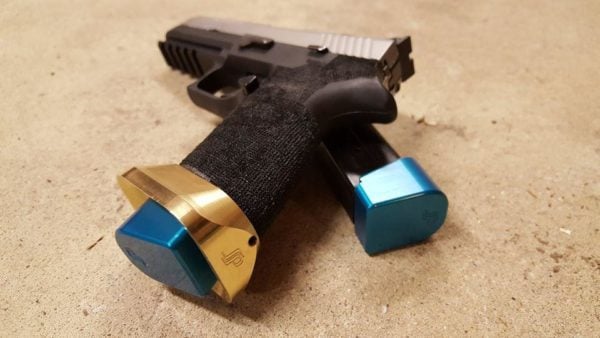
Major ability factor means a bigger bullet moving faster. To advantage the greater recoil this produce, and the lower capacity that unremarkably results, shooters incur fewer penalties if they don't hit the highest scoring zone on newspaper targets.
Major can be an reward, merely it isn't always. Don't let shooting minor against major scare you away from a partitioning where both are allowed!
In fact, one of the best things about Limited is its "anything without an optic goes" attitude, because it's virtually impossible for a new shooter's gun to not fit in here if nowhere else. Limited as well only restricts mag length, and allows magazines to be fully loaded.
Most manufactory magazines can exist used in Limited, making it a peachy place to beginning if you only own a few magazines (at least three would nevertheless be best) or don't have a lot of mag carriers (having merely two would be enough).
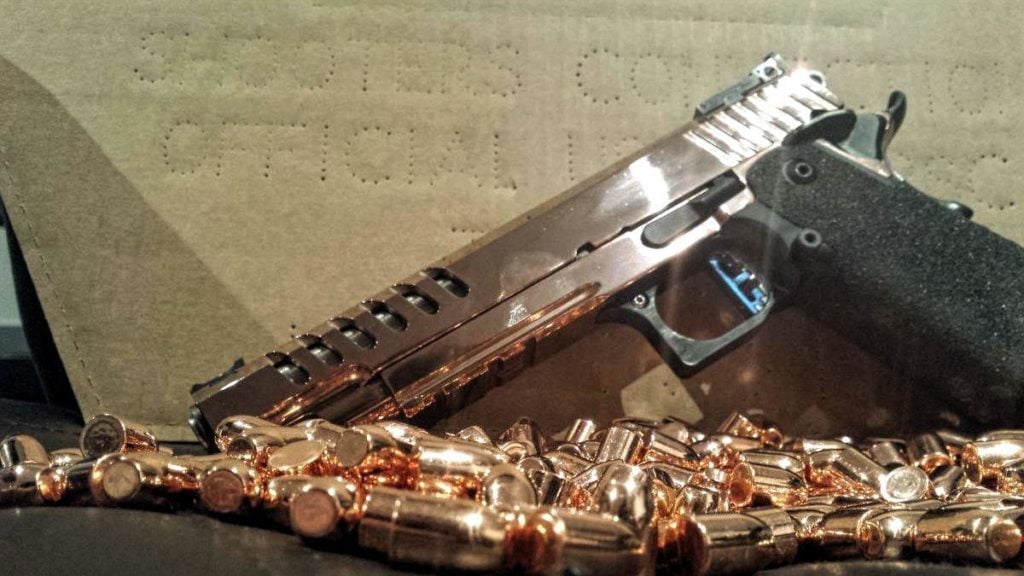
Limited has near no restrictions on placement or type of magazine carrier or holster as long as they are on the chugalug, meaning you tin stick magazines into forepart pockets or even holster your gun in appendix (AIWB) position.
You can't, however, use a holster that is cantankerous-draw or mounted behind yous; information technology must be on your potent-side hip or in front end of your hip on the stiff side. The ability to fully load magazines and to holster in most positions can brand Express a good choice for people who want to practice with their conduct gear.
Gabe White is a Main-class Express shooter who uses a concealed AIWB holster and mag pouches.
USPSA Limited ten Partition
As yous might have guessed by the name, Limited 10 is everything Limited is, except that magazines can simply be loaded to ten rounds.
Express x, again like Limited, allows the shooter nearly complete freedom in where to wearable magazine pouches and holsters, and in the types of holsters used. However, a shooter will need to carry as many magazines as a Production shooter (four or more than), so the two or three magazine pouches that are sufficient for Limited won't be enough here.
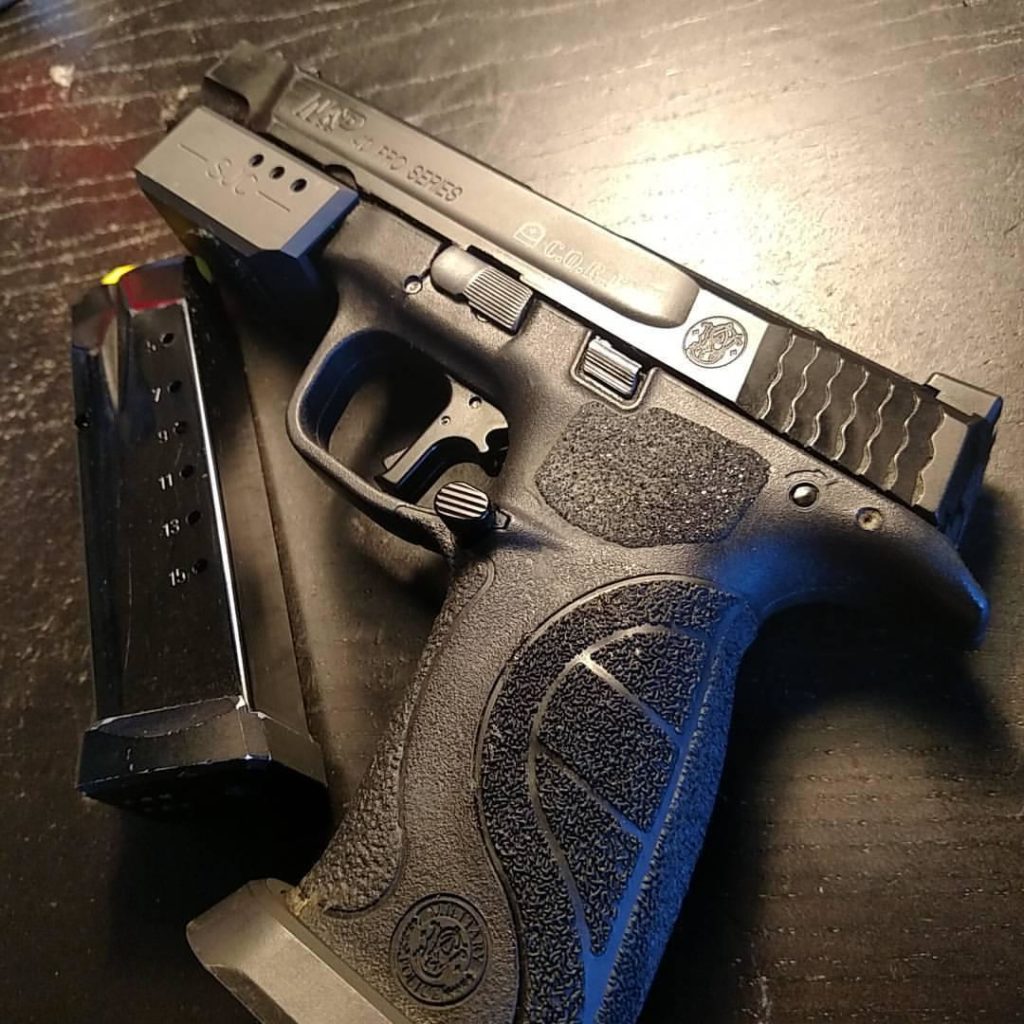
Relatively few competitors shoot in Express ten, only at that place are nonetheless good reasons to state in this partitioning. 1 of the almost common is when a shooter is located in a state where there are mag capacity limitations preventing the use of the larger magazines used in Limited, but she still wants to shoot a modified gun.
Another might exist that larger magazines simply aren't available for the shooter's gun of choice, and he doesn't desire to compete against Express shooters who wouldn't need to reload as often.
A third reason might exist that the shooter wants to shoot a gun too highly modified for Product or that shoots major power cistron (as all Production shooters are scored as if shooting minor), but wants to maintain other features of a limited-capacity division.
USPSA Open Division
While Limited allows wide breadth in gun modifications and set-upwardly, it still requires the use of fe sights.
Want to employ an optical carmine-dot sight on pinnacle of your Express gun? That will country y'all in the Open division.
As in Limited, there are a broad range of pistols used in Open, not to mention many different types of sight systems and variations in how they are fastened.
However, in addition to the optical sight, Open also allows longer magazines and therefore higher capacity.
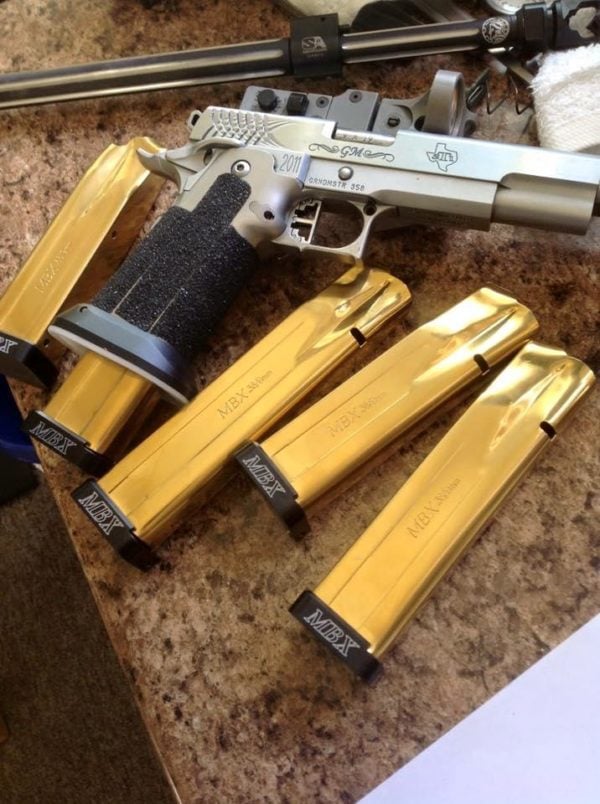
Open is the full "race gun" segmentation in USPSA, and the i most people think of when they remember that highly specialized and expensive "space guns" are necessary to compete.
They're non, even in Open, but they can exist a lot of fun if you like to test the limits of speed shooting a handgun.
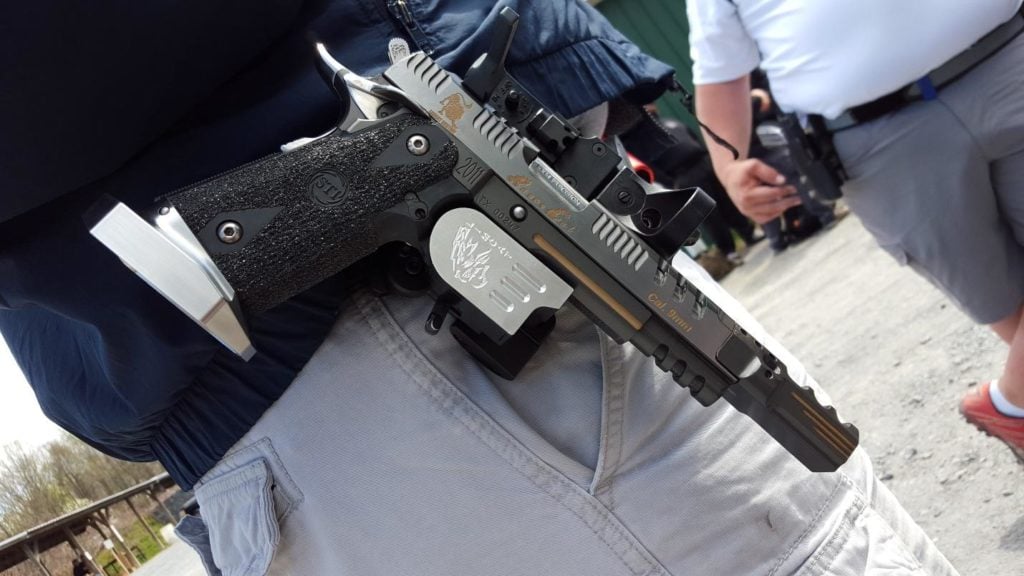
Open is like Limited and Limited 10 as far as magazine pouch and holster placement, every bit well as holster choice.
To further expand on what yous'll normally see in these divisions, "race" type holsters that don't fully enclose the gun are acceptable then long as they fully protect the trigger and accept a way to preclude the gun from actually falling out of the holster on its ain.
The holster can be placed at or in front of the stiff-side hip, signal the muzzle forwards, and driblet the grip beneath the belt line, as long as information technology's all the same fastened to the belt. Similarly, magazine pouches can go anywhere on the belt and angled in any management. They don't even demand to be pouches – magnets are okay also.
USPSA Bear Optics Division
In that location is another option bachelor who want to shoot with a ruddy dot likewise Open up, and that is the relatively new and withal provisional Bear Optics sectionalization.
While information technology'southward still technically in the testing phase, in that location is every expectation that Carry Optics volition get a permanent division and a popular place to play for Production shooters looking to dip a toe into the blood-red dot earth, especially equally several major manufacturers at present make guns factory-equipped with or to back up an optic.
It's as well a good partition for those who desire to make employ of the advantages of an optical sight, especially for aging eyes, without the total investment into a complete Open up gun.
Acquit Optics is sort a cross betwixt Open up and Production, with a little flake of Limited thrown in. Optical sights are permitted, only only if they are mounted to the slide of the pistol.
The base gun generally must be Production-legal, including being on the Production list and having express modifications. However, Carry Optics allows more stippling than immune in Production and allows fully-loaded extended magazines up to what is allowed in Express.
Carry Optics follows the same rules equally Production as to types and placement of holsters and magazine pouches although you will, of class, need fewer magazines and pouches with the higher chapters permitted.
USPSA Single Stack Division
Moving back to more standard guns, Single Stack is perchance the almost classic of all of the USPSA divisions. Information technology'due south where you'll desire to exist if yous want to shoot a 1911. Series 70 and series 80 are acceptable, likewise as calibers other than .45 ACP, but they must exist metal-framed, single-stack 1911s with standard iron sights on top.
While many people shoot off-the-shelf 1911s in Unmarried Stack, it's also the perfect home for that special custom 1911 that's been sitting in your safe.
Capacity is limited in this division, to 8 rounds in the magazine for major power factor (.45 ACP, 10mm, some .xl S&W) and 10 rounds for minor (9mm, .38 super, and some .forty Due south&W).
That means the shooter must take the ability to bear anywhere from iv all the mode upwards to eight magazines, all within the same magazine pouch restrictions as Production and Carry Eyes – behind the hip bone.
Holster style and placement are as well limited to backside the hip bone in Single Stack, and for men, the entire grip must exist over the top of the belt.
USPSA Revolver Sectionalization
Fans of older guns may besides be interested in the Revolver partition which, as its name indicates, is home of the wheelgun. Much like Single Stack, Revolver allows for both major and minor power factor, with varying capacity limits for each.
Revolver Major allows a maximum of six rounds in the gun at any time, and Revolver minor allows up to eight rounds. Either way, standard fe sights are required. In contempo years, the 8-round 9mm revolver has been particularly popular in this division, though the segmentation itself often sees few competitors overall.
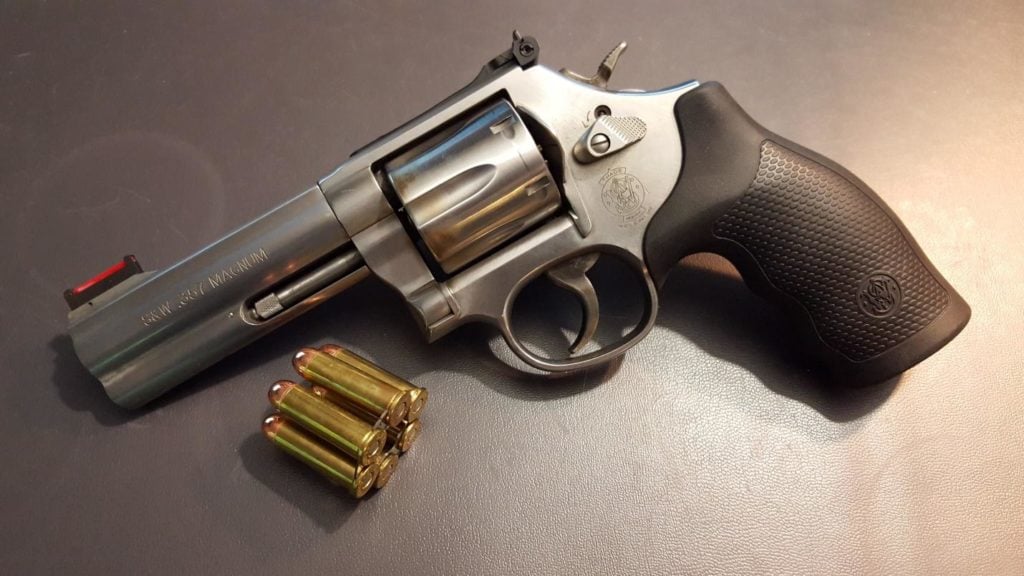
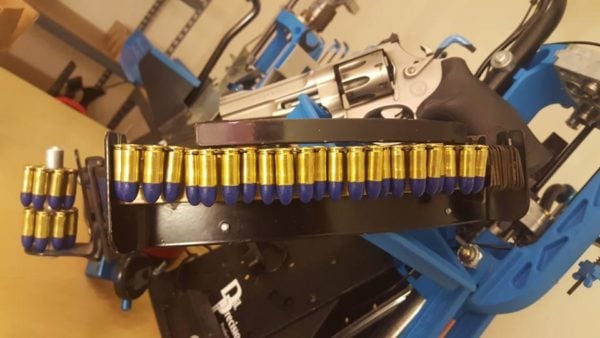
Regardless of power factor, Revolver shooters can opt to reload with any method she chooses, from loose rounds or speed strips to speed loaders or moonclips.
The devices used for reloading can exist mounted anywhere on the belt just are usually placed right in front end. Holsters follow the same rules as for Limited and related divisions, meaning that race holsters are permitted, every bit is placement behind or in front of the strong-side hip.
USPSA Pistol Cailber Carbine Sectionalisation
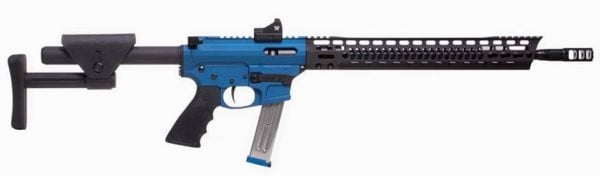
Pistol Caliber Carbine (PCC) is the newest conditional partition of USPSA and is very dissimilar from any of the others.
For starters, it'due south a rifle division in a sport that is primarily focused on the pistol, though PCC guns, as the proper noun implies, shoot pistol calibers.
PCC is where guns like 9mm AR-15s are welcome, with or without optics. Recollect of it like the super-Open up segmentation, where pretty much goes as long equally it'due south a rifle shooting a pistol caliber.
Somewhat obviously, PCC guns are not holstered; instead, there are some nevertheless-solidifying rules on how the guns tin can be transported around the range during a friction match.
Magazines are carried in belt-mounted pouches much like any other division, and at that place'southward no brake on where those are placed.
A word of warning if y'all're interested in PCC – because information technology'southward so new and different, not every USPSA club allows it at their matches.
Decision
Hopefully, that didn't just misfile you more! Rest assured, y'all can pick any division and withal have fun and learn a lot virtually shooting USPSA. As you get deeper into the game, you tin optimize your setup and brand certain you're in line with the nitty gritty of the rules.
Consult the rulebook or ask a lucifer director, range officer, or more seasoned shooter for more than details.
And don't forget – you aren't stuck with your first choice! Lots of people movement from division to division over time for all sorts of reasons ranging from boredom to money.
Interested in more than only pistol competition? Check out our guide to3 Gun Nation!
Which division volition yous choose to start out with or to shoot? Do you accept any more questions? Also cheque out our Editor'due south Picks for our favorite gear such every bit gun belts, mags, and pistol scarlet dots.
Source: https://www.pewpewtactical.com/choosing-uspsa-division/
0 Response to "what to look for in a competition pistol"
Post a Comment